
What Does It Mean to Be in a Secure-Functioning Relationship? and Why Should It Matter to Me?
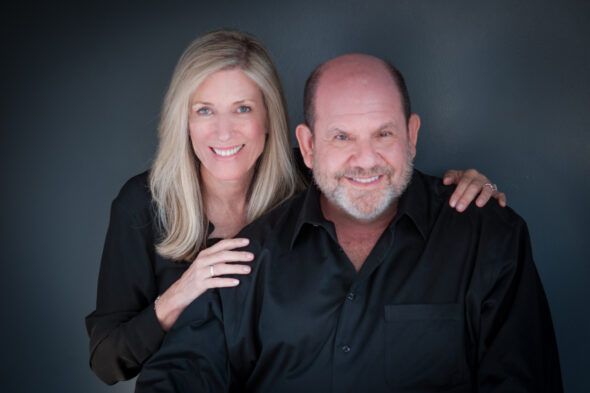
By Stan Tatkin and Tracey Boldemann-Tatkin //
Secure functioning refers to an interpersonal system based on principles of true mutuality, collaboration, justice, fairness, and sensitivity. It means that you and your partner are in a foxhole together, protecting each other from the outside world… and from each other. Secure functioning assumes you and your partner have different minds, with different interests, drives, and histories. Secure-functioning partners are fully interdependent in the sense that each happily accepts the other as a burden, and both agree they are in each other’s care.
In this kind of two-person system, you and your partner form a couple bubble, which you can think of as a protective boundary that protects your resources and sense of ongoing safety and security. Think of a couple bubble as an ecosystem or terrarium that provides you and your partner with the sustenance you need to carry out your daily tasks, deal with fears and anxiety, handle difficult situations and people, and undergo personal growth. In a secure-functioning relationship, you and your partner assure each other’s safety and security, and this frees up valuable resources necessary to be effective at everything, including development of the self.
Secure functioning is not codependency! The latter refers to a relationship wherein partners engage in too much unfairness, injustice, and insensitivity, and wherein full collaboration is denied, avoided, or inconsistent. Even though there are two people in a codependent relationship, they function as if they are in a one-person system that does not have room for both of them.
So why should this matter to you? According to research on infant attachment, adult pair bonding, and social justice theory, secure functioning is the only interpersonal system that allows partners to survive and thrive over the developmental lifespan of their relationship. Anything less than secure functioning, which would categorically be deemed insecure, is doomed because of its lack of mutuality.
But it is not easy to create a secure-functioning relationship, especially if either you or your partner, or both of you, come from insecurely attached backgrounds. If you are interested in trying, here are two steps to get you on your way. Keep in mind that both of you must agree to these principles in order to create a secure-functioning relationship. Since we’re talking about a two-person system, both people have to be fully on board.
Step 1: The relationship must come first, above all other matters. You must both put all your money on the relationship and each other. This is an investment, not a loss. You are in each other’s care. Remember, you are in a foxhole together. You agree to have each other’s backs. You live in a dangerous, indifferent world, with lots of unknown hazards coming your way. This is not a luxury; it’s a necessity.
Step 2: Come up with shared principles that are plaque worthy. Your principles must be easy to understand, pithy, and cover a lot of ground. Think Ten Commandments. Examples include:
• We protect each other in public and private.
• We drop everything to administer to the other’s distress, without complaint.
• We tell each other everything and are fully transparent.
• We are the first to know things, not second or third.
• We don’t let third things, people, or tasks interfere with our couple bubble unless we both agree.
• We never threaten the relationship in any way.
• We repair injuries and misunderstandings immediately or as soon as possible.
Make up your own principles or use some of these examples. Either way, both of you must fully buy into each principle and be able to explain why it’s a good idea for you and your partner. If you can’t do this, the principle will be worthless. You both have to drink the Kool Aid™ on this one.
There is much more to creating a secure-functioning relationship, but if you can do these first two steps, you will be ahead of most couples!
About the Authors
 Stan Tatkin, PsyD, MFT Clinician, author, PACT developer, and co-founder of the PACT Institute, Dr. Tatkin teaches at UCLA, maintains a private practice in Southern California, and leads PACT programs in the US and internationally.

Tracey Boldemann-Tatkin, PhD has served as the director of various philanthropic family foundations over three decades. In addition to her leadership roles, she has been involved at the ground level of humanitarian efforts worldwide. Tracey is co-founder of the PACT Institute.