How to Meditate
by: Loden Nyima, Resident Teacher at DMC
Meditation is a process of trusting ourselves and coming home. We often come to meditation for relief from stress, turmoil, or from inspiration for meaning and truth. It’s that very part of ourselves seeking such things that already has them. It’s like longing for like. It’s our innate wisdom, compassion, and freedom shining through. We’re learning to trust that intuitive part of ourselves, to come home, and let it expand.
Shamatha is a Sanskrit word that means “peaceful abiding”. It describes an ancient form of mediation that pre-dates Buddhism by a long shot and has been practiced by people of all or no spiritual or religious tradition for thousands of years. Many of the teachings we know today in the popular mindfulness movement were derived from these and related teachings, either in Buddhism, Yoga, or more.
Anyone can practice shamatha, we don’t need to have any interest in Buddhism or in any spiritual tradition.. And if we do have an interest in Buddhism, shamatha is quite foundational to our meditation practice and is something we’ll use extensively.
While it’s called “peaceful abiding”, I would say that in shamatha we make peace with ourselves and as a result we’re able to rest. The struggle is over, and the natural stability, clarity, and strength of our mind and heart can be as they are. I’ll take us through how to do this and say more about that in a moment.
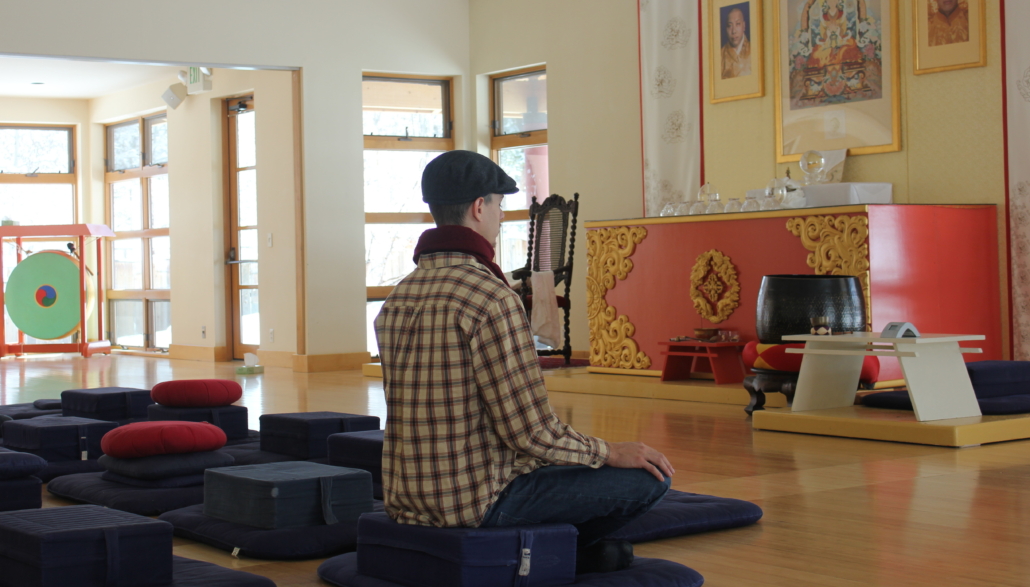
The first step is to find a posture that allows for the length from our seat through the torso to the crown of our head to be upright, open, and relaxed without tension or pain. This is commonly done sitting on a meditation cushion with our legs crossed, ensuring our seat is positioned high enough so that our knees are lower than our hips. It can also be done equally well sitting on a chair, ideally with our feet grounded and flat on the floor and our back not leaning against the back of the chair.
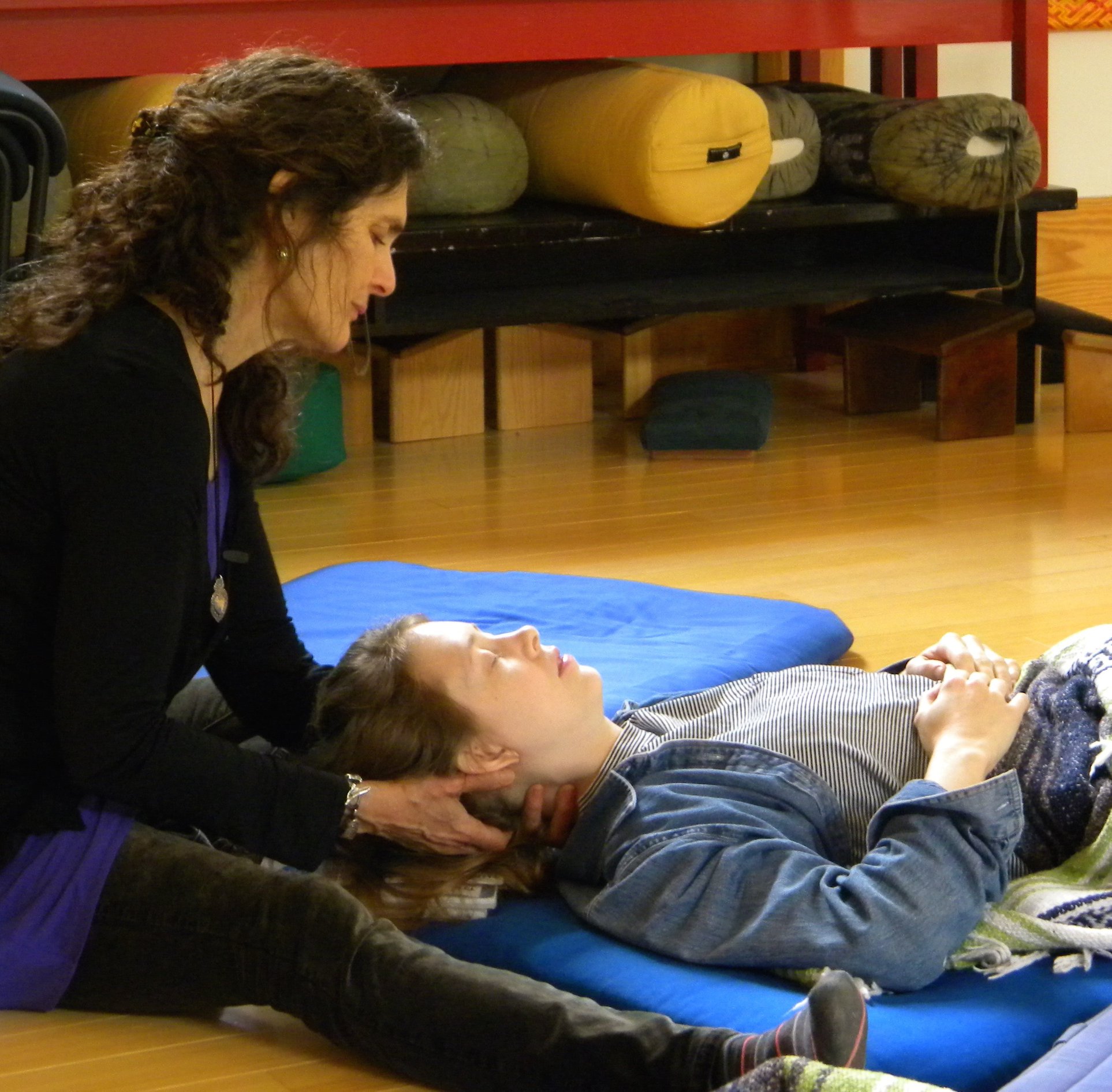
Sometimes we have to experiment with smaller support cushions, folded blankets, or the like, to help find a posture that works for us. We can rest our hands on our thighs or folded in our laps. We can also meditate lying down flat on our backs, or even standing up. Our eyes usually remain open but resting gently on the floor in front of us. The idea is we don’t need to escape in order to find peace.
Next, we become aware of our breathing. We really feel our breathing. We’ve been doing it our whole lives, but how does it feel to breathe? How does it feel for the breath to come through our bodies and back out into space? We become our breathing.
Within the feeling of our body breathing, we allow ourselves to feel whatever we feel. We might feel pain, pleasure, tiredness, alertness, lingering emotional energy from our day—whatever it is, it’s welcome. We welcome it into our breath.
The attitude here is one of complete friendliness to ourselves, total acceptance. Sometimes we think meditation is about finding some separate peace away from our problems, but real peace is the peace we make with ourselves. It’s the peace that comes from being willing to feel whatever we feel, and breathe, and rest as we are.
So this is basically it, we sit and we breathe.
It’s deceptively simple, because what we’re doing is actually extremely profound. We’re learning that we have and are everything we need, just as we are, and we can sit down and rest. We can deepen, open, and grow, and from that, we engage in the world.
As we continue to sit and breathe, we’ll also begin to notice all the activity in our minds and find ourselves distracted in thoughts. Each time we notice this, we simply and very gently return to our breath. We’re learning that we can notice our thoughts and return to the breath, that we don’t have to be trapped in a prison of our own making, trapped by believing everything we think. We can breathe.
We’ll also experience emotional energy, strong feelings, unprocessed material, etc. I’ve written another article about that called “Our Self-Healing, Self-Rejuvenating Mind”. But the pith is, instead of getting caught up in the stories and narratives we have about these emotions, we instead find the raw feeling or energy in our bodies and hold it, breathe with it, love it, like massaging a knot in a muscle—in this case, with our breathing.
Meditation is something we can do a few minutes a day, three breaths at a time at any moment, or for years in retreat! The right amount is the amount that feels attainable and inspiring for us. Gradually we’re stabilizing, clarifying, and strengthening our minds and hearts, or rather, letting those natural qualities grow. It can definitely have a lot of benefits, but we’ll have to see for ourselves how it works for us and trust our experience.
If you’d like to learn more about meditation, I’d welcome you to the various Path of Meditation retreats we have here at DMC. And in the meantime, or if you already meditate, you may enjoy more articles I’ve written on this blog which all describe different parts of the meditative journey.
Join Loden Nyima for these upcoming programs:
Read Next: Becoming Our Own Best Friend
About the Author: Loden Nyima
 Gelong Loden Nyima is a fully ordained Buddhist monk. He lived at Gampo Abbey from 2009 – 2017 where he practiced intensively, completed Shedra studies, and served in various roles including as a Shastri. He now lives at Drala Mountain Center where he serves as Resident Teacher and a founding faculty member for the Summer Seminar and other programs. He spends a portion of each year in retreat, frequently travels to continue his own dharma education, and can often be seen jogging around the land at DMC.