Connecting to Blessings

By Judith Simmer-Brown
During the academic year 1988-89, my family and I lived in Bodhnath in the Kathmandu Valley, just outside of Kathmandu. Our home was adjacent to the powerful Bodhnath Stupa, one of the most sacred pilgrimage sites of the Himalayans. We joined the vibrant Tibetan refugee community that practiced there every day, circumambulating early in the morning and in late afternoon, reciting prayers and mantras or just socializing with friends. Sometimes we sat quietly inside one of the tiny lamp-lit shrines. Our Tibetan friends embraced our baby son and us, sweeping us along with them as they walked and introducing us to everyday devotional practices of the Valley.
Invisible Waves of Blessings
Adhishthana, a concept central to many Eastern spiritual traditions, particularly Buddhism, revolves around the transformative influence of an enlightened being’s blessings. This idea is rooted in the belief that the presence of an enlightened individual and the transmission of spiritual wisdom and energy can occur through various means.
However, adhishthana is not just about passively receiving grace. It also involves an active and earnest participation in spiritual practices that align one’s mind with that of an enlightened teacher or the Buddha. The essence of adhishthana lies in preparing oneself internally, creating the right mental and spiritual conditions to be open and receptive to these profound blessings. This process underscores the importance of personal spiritual effort in conjunction with the guidance and influence of enlightened beings.
For someone involved in guiding others on their path to wellness and personal responsibility, the takeaway from the principle of adhishthana might be as follows:
- Sacred Atmosphere: Create a space—physical, mental, or communal—that supports and nurtures growth and well-being. This could involve the setting for health education, the energy brought into wellness coaching, or the culture fostered within a community.
- Intentional Presence: Just as the enlightened teachers impart blessings through their mindful actions, gestures, and words, the way one presents themselves and interacts with others can significantly impact their ability to guide and inspire.
- Non-conceptual Transmission: While education and knowledge are critical, there’s also a non-verbal and experiential aspect to teaching and learning. Encouraging others to be open to learning not just through words but through shared experiences can facilitate deeper understanding.
- Community Synergy: The mandala of practitioners mentioned reflects the power of community. Cultivating a supportive group dynamic can amplify the benefits of any health or wellness program.
For those you guide, these principles can be woven into the narrative of taking ownership of one’s health and life, emphasizing that while the journey is personal, it’s also supported by the collective energy and wisdom around them.
Continuing the Blessings of the Buddha
The use of stupas in Buddhism as vessels for the blessings of the Buddha and enlightened teachers is a powerful tradition. These sacred structures serve not only as memorials but also as focal points for communal and individual practice, embodying the essence of spiritual teachers and their teachings.
Your connection to the Bodhnath stupa during a time of loss illustrates the profound impact that such a sacred monument can have on an individual’s spiritual journey. It provided you with a tangible point of contact with the blessings of your late guru and the lineage to which he belonged, offering a sense of direction and sustenance during a difficult time.
For those you guide, this experience can serve as a reminder of the importance of physical spaces in the healing and spiritual process. Creating a personal ‘stupa’—which could be a designated space in one’s home for reflection and meditation, or even a community center where individuals can gather—might help others find solace and connection. These spaces become sanctuaries where people can draw strength from their practices and the communal energy.
Furthermore, the idea of continuing a legacy, as the stupas do for the Buddha’s teachings, can resonate with the theme of taking ownership of one’s health and life. It suggests that the wisdom and practices that promote well-being can be passed on, creating a timeless space where individuals support each other’s journeys towards better health and deeper understanding.
Stupas Need Our Practice and Devotion
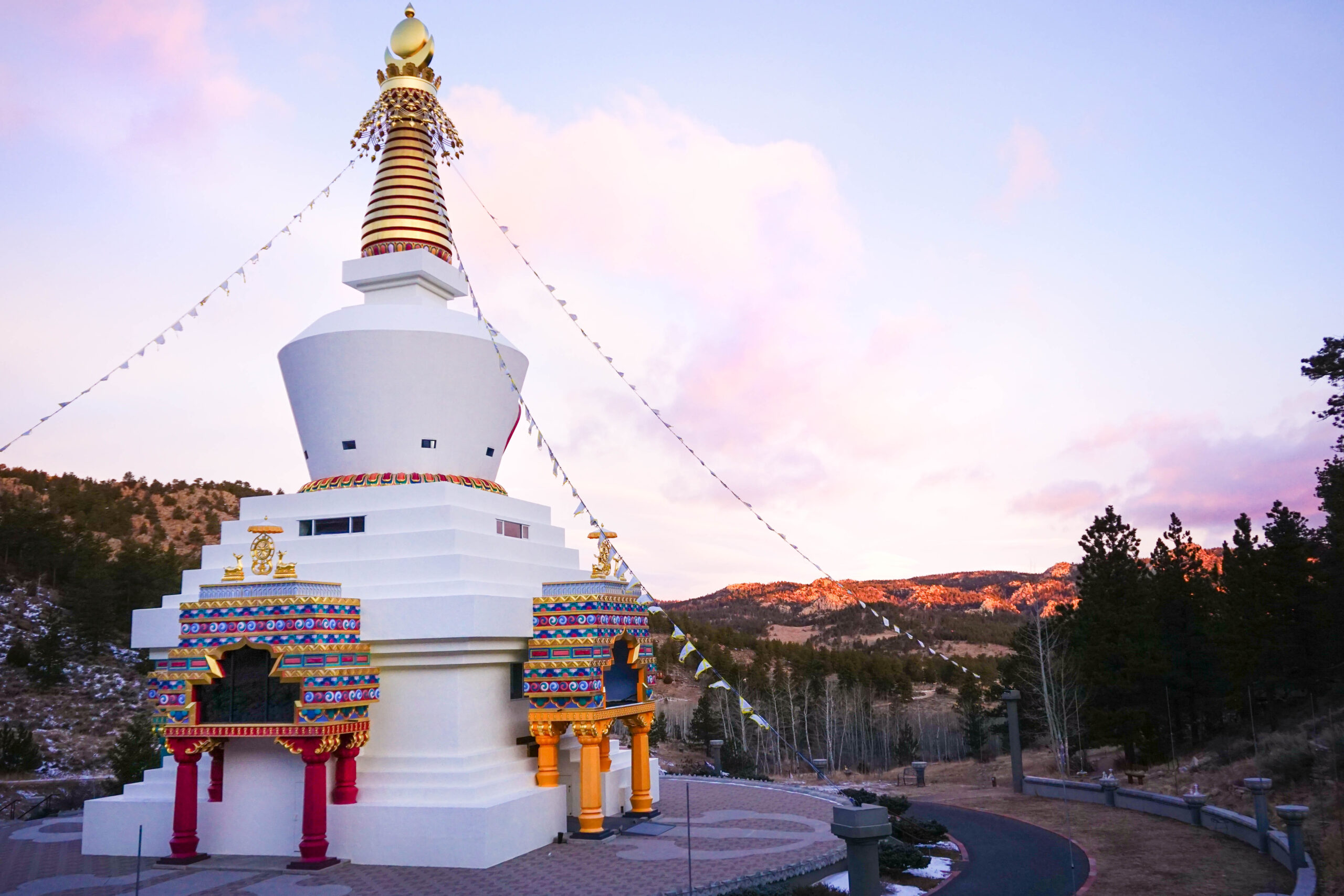
Your sangha’s creation of a stupa as a sacred space is a significant gesture of honor and remembrance for the Vidyadhara and the rich lineages that inform your practice. It stands as a testament to the devotion and the continuity of the teachings that have shaped your community’s spiritual path.
Stupas serve as more than historical relics; they are living symbols of enlightenment, peace, and a focal point for practice. They can indeed become powerful conduits for connecting with the timeless wisdom of the Buddha and the lineage teachers. By actively engaging with the stupa through circumambulation, meditation, and offerings, you reaffirm its relevance and energize its role as a source of blessings.
Encouraging your community to interact with the stupa not as a static monument but as an active part of your practice can deepen their sense of connection to the lineage. It can become a powerful practice of mindfulness and devotion, transforming the stupa into a dynamic sanctuary that continuously feeds the spiritual life of the sangha.
In this way, the stupa can act as a bridge linking the tangible and intangible, the historical and the timeless, the individual practice and the collective energy of your community. Your invitation to the community to engage with the stupa is an invitation to participate in the living tradition of your lineage, to take ownership of their spiritual path, and to nurture the blessings that flow from dedicated practice.
Join Judith this September!
About Judith Simmer-Brown
 Judith Simmer-Brown, Ph.D., has just retired as Distinguished Professor of Contemplative and Religious Studies at Naropa University in Boulder, Colorado, where she has taught since 1978. As Buddhist practitioner since the early 1970’s, she became a student of Chögyam Trungpa Rinpoche in 1974, and served as an acharya from 2000-2022.. Her teaching specialties are meditation practice, Shambhala teachings, Buddhist philosophy, tantric Buddhism, and contemplative higher education. Her book, Dakini’s Warm Breath (Shambhala 2001), explores the feminine principle as it reveals itself in meditation practice and everyday life for women and men. She has also edited Meditation and the Classroom: Contemplative Pedagogy for Religious Studies (SUNY 2011). She and her husband, Richard, have two adult children and three grandchildren.